
NATO: Maritime Special Operations with Polish Participation
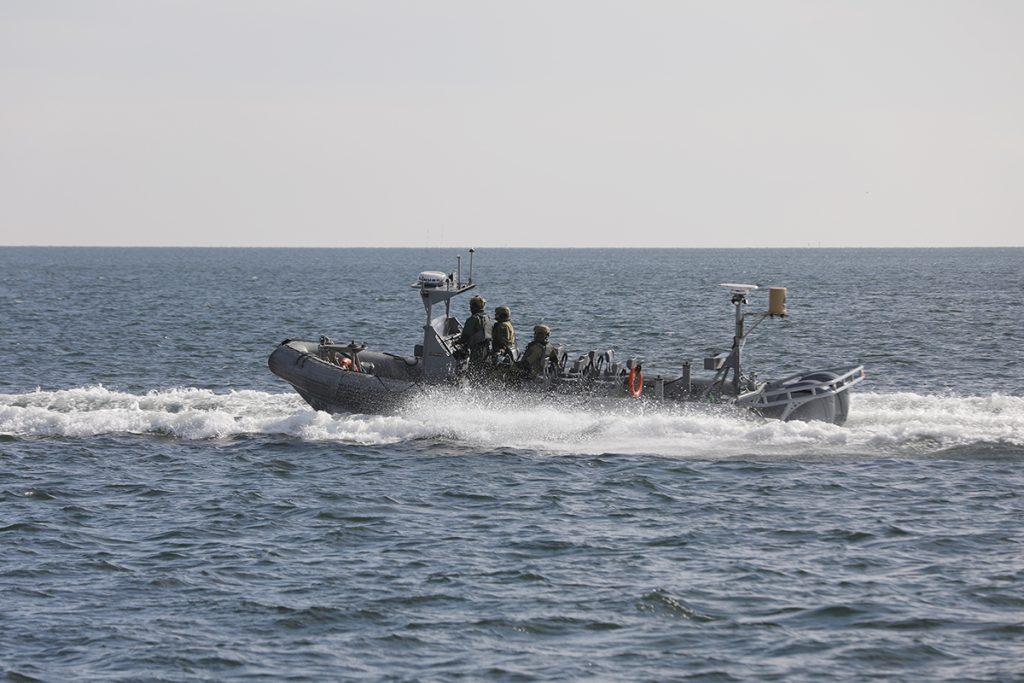
The Bold Machina (BOMA26) exercise is underway in Portugal, representing one of NATO’s more notable initiatives focused on experimentation and the development of capabilities for maritime special operations forces. Soldiers from Formoza, an elite unit of the Polish Special Forces, are taking part in the exercise.
Formoza specializes in maritime combat operations, and its combat divers are training alongside personnel from Portugal, Spain and Bulgaria.
Among other things, they are practising methods of infiltrating areas controlled by an adversary. NATO is testing whether modern technologies can help special forces accomplish such missions, as well as whether they can be used to detect divers before they approach their targets.
The exercise is being held at a naval base in Lisbon, home to a significant part of the Portuguese fleet. Representatives from a total of 20 NATO countries and 26 companies are participating.
Bold Machina 2026, however, is not limited to exercises involving diving teams. This year’s edition focuses on the practical testing of technologies that could change the way maritime operations are conducted in the near future. Unmanned systems are being tested on the surface, underwater and in the air.
In one scenario, NATO is using unmanned surface and underwater vehicles to determine whether the Alliance can penetrate “hostile” coastlines and ports without putting personnel at risk. Another scenario involves testing methods for tracking and countering unmanned aerial vehicles attempting to carry out attacks.
General Tony Turner, Deputy Commander of NATO’s Allied Special Operations Forces Command (SOFCOM), told journalists in Portugal that Bold Machina is, in practice, a series of experiments and tests.
“This is how NATO’s Maritime Special Operations Forces are adapting to future operations. Of course, we are drawing on the experience of our partners in Ukraine and from the conflict in Ukraine. We are taking on the most difficult challenges and problems by bringing together our special operations personnel, civilian technologists and industry representatives to consider how we can adapt and respond to these tactical and operational challenges, and how we can deploy capabilities that can be put to use,” he stressed.
“We are here to defend every inch of Alliance territory. Of course, if deterrence fails, we are ready to defend it,” Turner added.
Participants in Bold Machina point out that the exercise demonstrates a changing approach to the development of maritime military capabilities. Instead of waiting years for a finished system, military personnel, scientists and industry representatives work together on individual projects, develop solutions, test them under conditions resembling real-world operations, and then decide which technologies are worth developing further.
Companies selected by NATO are also participating in the exercise. One of them is Norway’s Blueye Robotics, whose underwater drones gained international attention after they were used in 2022 to document damage to the Nord Stream gas pipelines on the Baltic seabed.
Another participating company is Greece-based Reconis, which focuses on autonomous artificial intelligence systems and unmanned aerial vehicles. Its CEO, Fotios Amaksopulos, told the Polish Press Agency (PAP) that during the exercise the company supplied NATO forces with several UAVs operating on different frequencies and using fibre-optic technology and sensors.
The results of the experiments conducted in Portugal will be used to plan the next edition of the exercise, which is scheduled to take place in Greece next year.
Photo: Sławomir Lewandowski / PortalMorski.pl
Source: PortalMorski.pl


