PLO Wants to Provide Maritime Transport Services for the Military and Carry LNG

According to a new strategy for 2026-2030, Polish Ocean Lines (PLO) intends to invest in vessels serving purposes including military transport and LNG transportation, the Industrial Development Agency, which owns the majority of PLO shares, informed PAP.
In September of this year, the general meeting of Polish Ocean Lines (PLO) approved the company’s strategy for 2026-2030. The Industrial Development Agency (ARP) currently holds 98.25% of PLO shares, with the remaining shares belonging to Gdynia Shipyard (0.75%) and employees (1%).
As the Agency informed PAP, the first project that PLO intends to implement within the development strategy is the purchase of a used ro-ro vessel, a sister ship to those currently owned (ro-ro vessels are ships that enable easy loading and unloading of goods transported on wheels – PAP). ARP stated that the purchase value of such a vessel is approximately 160 million PLN.
“Currently, there is noticeable increased demand for cargo transport services in the maritime transport market, which is why the purchase of a ro-ro vessel could be an opportunity for the company’s development,” the Agency stated.
This vessel has dual-use capability, also for transporting “specific groups of military equipment for own and allied forces.”
ARP assumes that the purchase of another ro-ro vessel will “strengthen existing potential and increase revenue, and in the future will create the potential to restore the Mediterranean line” that PLO once operated.
“Revenue from the expanded fleet will also allow for increases in the company’s financial potential, which will enable further investments and expansion of PLO’s offerings,” ARP emphasized.
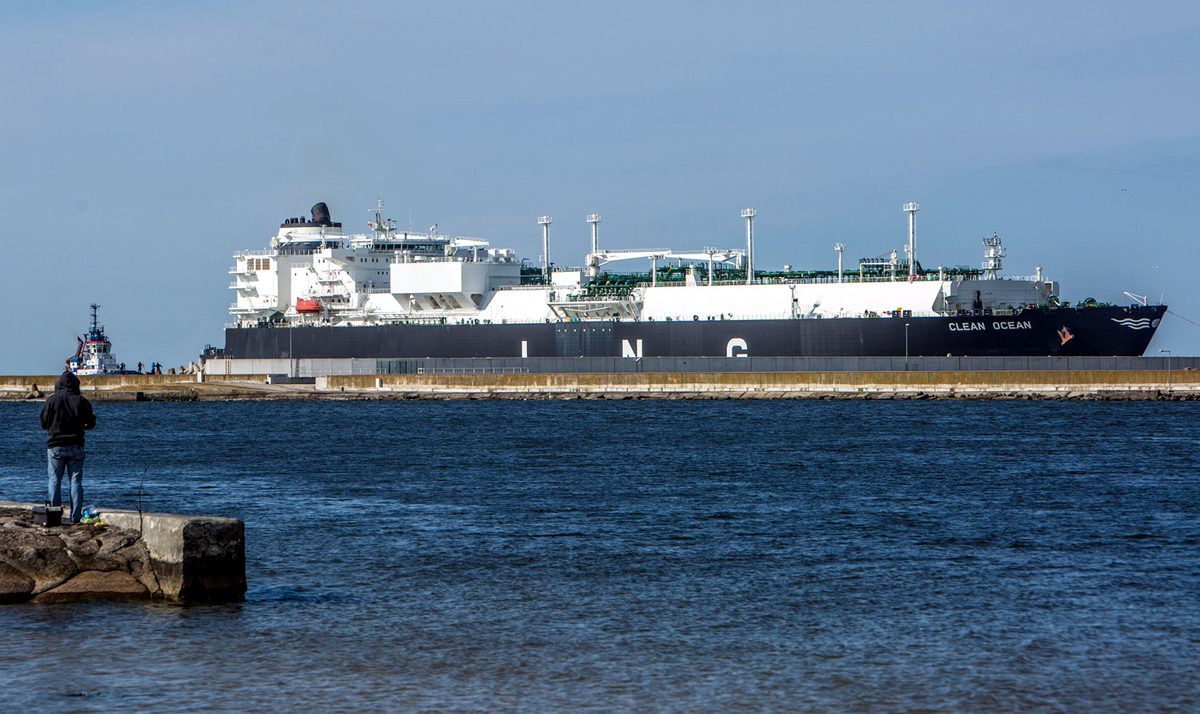
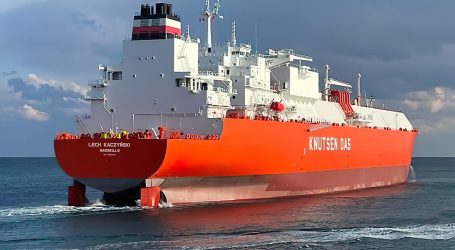
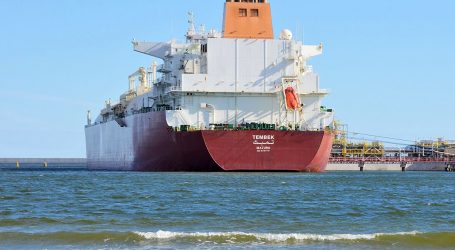
The Agency also assumes entry into a new market through the purchase of a used LNG bunker vessel (a ship for transporting liquefied natural gas – PAP) or construction of several LNG bunker vessels in Polish shipyards. The company indicated various sources of financing for such projects, including loans, recapitalization from ARP, own funds, KPO (National Recovery Plan), budget funds, and possible involvement in projects of other financial institutions.
The company’s strategy also provides for the construction of new tonnage vessels in the MPV Coasters category (an MPV coaster is a small multipurpose vessel designed for coastal navigation – PAP) with the ability to transport heavy/project cargo (heavy and oversized – PAP), also with the possibility of including ice class in the project, meaning adaptation for navigation in ice conditions, with special reinforcement of the hull and propulsion system.
“The project assumes construction in a domestic shipyard of two multipurpose short-range vessels / minibulkers 4000 – 6000 DWT (a vessel for transporting bulk cargo over short distances – PAP),” ARP informed.
Such vessels could enter the port in Elbląg.
“Indirectly, one can enter this market through bareboat (charter of a vessel without crew – PAP),” the company stated.
ARP emphasized that PLO is already conducting preliminary talks with the financial market, which is “potentially interested in participating” in these projects.
It added that as part of implementing the strategy, PLO will continue to develop ship chandler activities (supplying ships in seaports with food and necessary products).
Polish Ocean Lines is a shipowning company with a 75-year tradition in liner shipping. At its establishment, it possessed 43 ships with a capacity exceeding 200,000 DWT and operated 13 shipping lines. The company states that its reach then included ports on the Baltic, Mediterranean, Middle and Far East, as well as on the east coast of South America. In the 1970s, the PLO fleet grew to 176 units with a total capacity exceeding 1.2 million DWT, and annual transport grew to over 5 million tons. Employment rose to over 10,000 people. PLO’s flagship vessel was the transatlantic liner m/s Batory, later replaced by the vessel Stefan Batory.
Since March 1996, after the creation of six shipowning companies, PLO’s activity as a shipowner was practically terminated. At the beginning of 1999, the PLO Group consisted of 12 companies (2 in liquidation), including 5 shipping companies. All employed approximately 3,000 people, including 1,450 sailors. On June 29, 1999, the state-owned enterprise PLO was transformed into a joint-stock company.
Currently, the company’s activities focus on providing maritime transport services. PLO operates two ro-ro vessels: POL STELLA and FRANCESCO NULLO, which operate in the charter market between ports in Italy and ports in Turkey.
PLO also conducts ship chandler activities through POL-Supply.